
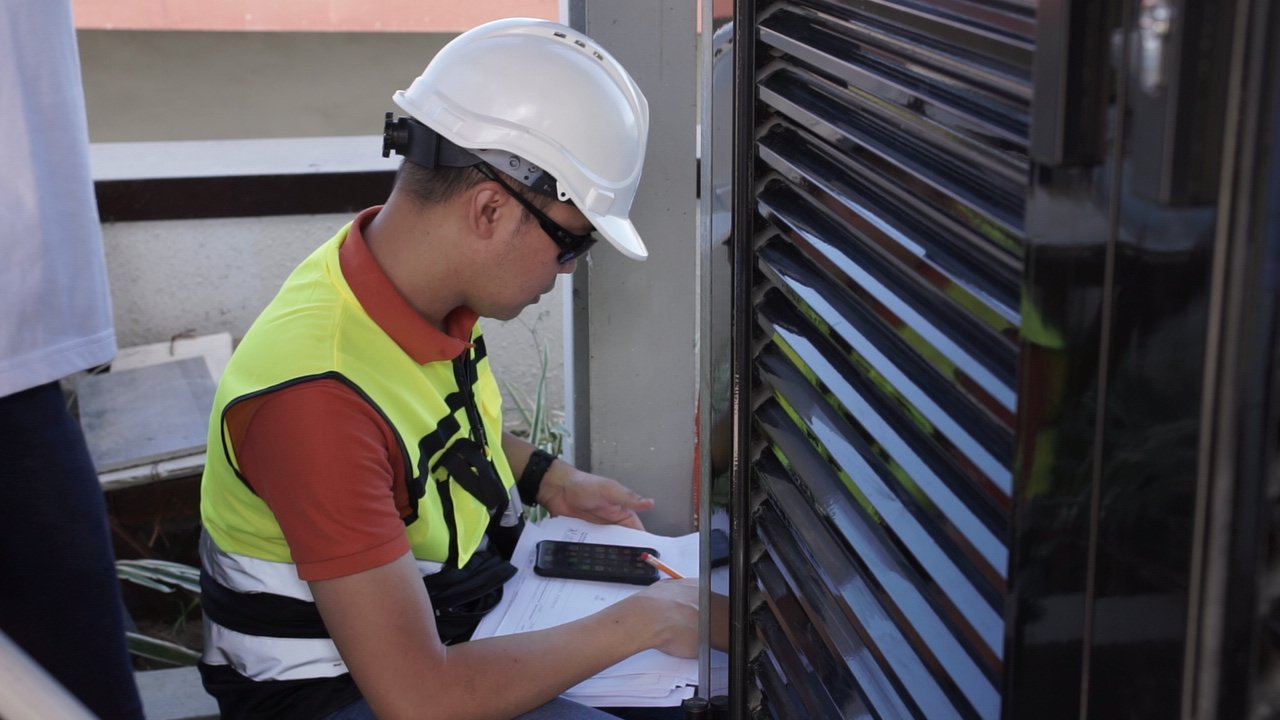
Lower bills, higher value — audits, modeling, retro-commissioning, and analytics that prove the savings.
Service Overview
Energy & Performance Optimization is FAMU’s engineering practice dedicated to making buildings demonstrably cheaper and cleaner to run. It is the disciplined process of measuring how a building actually consumes energy, identifying where that energy is wasted, designing and implementing improvements, and then verifying — with data — that the promised savings are real. The service covers energy audits, building energy modeling, retro-commissioning, HVAC and lighting optimization, renewable energy integration, smart-building analytics, utility benchmarking, and measurement and verification (M&V).
The central objective is performance with proof. Many buildings are sold sustainability measures that never deliver because no one checks. FAMU’s approach is rooted in our performance-driven engineering philosophy: we prioritize low-cost and no-cost measures first, capture the savings that require little or no capital, and reserve investment for upgrades that pay back. Every recommendation is quantified, and every implemented measure is verified, so clients know exactly what their money bought.
Energy is typically the largest controllable operating cost in a building, and energy-related emissions are the largest component of most organizations’ carbon footprints. With volatile energy prices, rising grid carbon scrutiny, and tightening efficiency regulation — from the UAE’s demand-side management programs and Saudi energy-efficiency mandates to the Philippine Energy Efficiency and Conservation Act — inefficient buildings face mounting financial and regulatory pressure. At the same time, every unit of energy saved flows straight to net operating income and asset value. For owners, optimization is one of the highest-return, lowest-risk investments available in the built environment.
Performance optimization is also the engine of decarbonization. Efficiency-first is the cheapest, fastest tonne of carbon to abate — it reduces emissions while reducing cost, unlike many sustainability measures that trade one for the other. No credible Net Zero strategy is achievable without first driving down the energy intensity of the existing building stock, which is precisely what this service does.
Energy optimization applies wherever energy is consumed at scale: commercial offices and towers, government buildings, hospitals (among the most energy-intensive of all building types), hotels and resorts, malls and retail, universities and schools, industrial and manufacturing plants, cold storage and logistics, and data centers (where cooling and power efficiency directly determine profitability). Projects range from a single-building energy audit to a portfolio-wide efficiency and M&V program, and from a retro-commissioning exercise on existing systems to renewable integration and smart-analytics deployment.
FAMU’s methods follow international best practice. Energy audits are conducted to ASHRAE Level I, II, and III rigor, matching depth to decision-making needs. Energy modeling follows ASHRAE 90.1 Appendix G and equivalent protocols. Measurement and verification adheres to the International Performance Measurement and Verification Protocol (IPMVP), the global standard for proving savings. Energy management systems are structured around ISO 50001, and our team includes Certified Energy Managers (CEM) and ISO 50001 Lead Auditors. Increasingly, best practice also embraces continuous, data-driven optimization — using metering, fault detection and diagnostics, and analytics to sustain performance rather than letting it drift after a one-time fix.
The market is shifting from episodic energy projects toward ongoing, analytics-enabled performance management. Smart meters, IoT sensors, and building analytics platforms now make it possible to detect faults, benchmark continuously, and quantify savings in near-real time. Grid-interactive efficient buildings, demand response, on-site solar, and battery storage are moving from novelty to mainstream. FAMU helps clients adopt these capabilities pragmatically — capturing the operational savings of analytics without over-investing in technology that does not pay back.
Energy optimization is the most directly measurable contributor to the Environmental pillar of ESG and to any Net Zero commitment, producing exactly the verified consumption and emissions data that disclosures require. It strengthens climate resilience by reducing dependence on volatile energy supply and by improving the efficiency of cooling in a warming climate. Its value spans every phase: in design, modeling steers systems toward efficiency before they are built; in construction and commissioning, performance is locked in; and — most importantly — in operation and maintenance, audits, retro-commissioning, and M&V recover the savings that buildings inevitably lose over time. For existing assets in particular, this service often delivers the fastest, clearest return of anything in FAMU’s portfolio.
Why Choose FAMU?
Energy claims are easy to make and hard to prove. FAMU is built around proof — our engineers quantify before, model the change, and verify after.
Certified energy experts
Certified Energy Managers (CEM) and ISO 50001 Lead Auditors lead every engagement.
Performance-first philosophy
We capture low-cost and no-cost savings before recommending capital spend, maximizing ROI.
Proof through M&V
Savings are verified to IPMVP, so you pay for results, not promises.
Modeling depth
Experienced in IESVE, EnergyPlus, DesignBuilder, and eQUEST for accurate, defensible analysis.
Whole-building expertise
HVAC, lighting, envelope, controls, renewables, and analytics — we optimize the system, not just a component.
Data-driven
Smart metering and analytics turn one-time audits into sustained performance.
Award-winning engineers
Recognized among the Top Engineers in the Middle East (2023–2025).
Certification synergy
Our energy work directly supports LEED, EDGE, and Net Zero targets, adding value beyond the utility bill.
This service is anchored in FAMU’s core engineering strengths:
- Energy management (ISO 50001, CEM)
- Building performance optimization
- Energy modeling and simulation
- Measurement & verification (IPMVP)
- HVAC and controls engineering
- Renewable energy and smart-building analytics
- Facility management for sustained performance
Savings you can bank
We do not hand you a list of generic measures. We hand you quantified savings, an implementation plan, and verified results — the evidence your finance team, your board, and your auditors need.
What FAMU Offers
Scope of Services
- Energy audits (ASHRAE Level I, II, III)
- Building energy modeling and simulation
- Retro-commissioning (RCx) of existing buildings
- HVAC system optimization and controls tuning
- Lighting and lighting-controls optimization (LED retrofits, daylight harvesting)
- Building envelope performance assessment
- Renewable energy integration (rooftop solar, feasibility, sizing)
- Smart-building analytics and fault detection & diagnostics (FDD)
- Utility benchmarking and energy KPI tracking
- Measurement & verification (IPMVP) of implemented measures
- ISO 50001 energy management system development
Key Deliverables
- Energy audit report with quantified energy conservation measures (ECMs)
- Energy model and baseline / calibrated simulation
- Prioritized ECM list with cost, savings, and payback
- Retro-commissioning findings and corrective-action plan
- Utility benchmarking dashboard and energy KPIs
- Renewable energy feasibility and sizing study
- M&V plan and post-implementation savings verification report
- Energy management plan / ISO 50001 documentation
- Executive summary with ROI and carbon-reduction impact
Our Methodology
We start by establishing a true baseline from utility data and metering, then conduct a structured audit to locate waste across HVAC, lighting, envelope, controls, and operations. We model the building to test interventions and quantify savings, then prioritize measures by payback — capturing no-cost and low-cost wins first. After implementation, we verify results against the baseline using IPMVP, closing the loop so savings are proven, not assumed.
Where clients want lasting performance, we layer on metering, analytics, and an ISO 50001 management system so the building is continuously optimized rather than slowly drifting back to inefficiency.
Service Snapshot
| Project Phases Covered |
|
| Applicable Standards |
|
| Tools & Software |
|
| Industries Served |
|
| Typical Timeline | Energy audits typically 4–10 weeks depending on level and building size; retro-commissioning 3–6 months; M&V spans an agreed performance period (often 12 months); continuous optimization is an ongoing service.Energy audits typically 4–10 weeks depending on level and building size; retro-commissioning 3–6 months; M&V spans an agreed performance period (often 12 months); continuous optimization is an ongoing service. |
| Client Support |
|
Expected Outcomes
- Quantified, prioritized energy savings opportunities
- Verified reductions in energy use and cost
- Lower carbon emissions and ESG-ready data
- Improved occupant comfort and equipment reliability
- A clear, funded efficiency and renewables roadmap
- Sustained performance through monitoring and management systems
Optional Value-Added Services
- Net Zero energy pathway studies
- Demand-response and tariff-optimization advisory
- Battery storage and EV-charging feasibility
- Green building certification support using energy results
- Sub-metering strategy and deployment
- Energy-efficiency financing and incentive guidance
Benefits to Clients
| Client Value | What It Means for You |
|---|---|
| Lower energy consumption | Audits and optimization routinely uncover 10–30%+ savings potential. |
| Reduced operating costs | Savings flow directly to net operating income, year after year. |
| Carbon reduction | Efficiency is the cheapest tonne of carbon abated — measurable for ESG and Net Zero. |
| Increased property value | Lower running costs and higher NOI lift asset valuation. |
| Improved ESG performance | Verified energy and emissions data strengthen disclosures and ratings. |
| Regulatory compliance | Alignment with energy-efficiency mandates and demand-side programs. |
| Risk reduction | Less exposure to energy-price volatility and carbon-pricing risk. |
| Better facility performance | Tuned systems improve comfort, reliability, and equipment life. |
| Higher productivity | Stable temperatures and good ventilation support occupant wellbeing and output. |
| Long-term sustainability | Monitoring and management systems keep performance high for the asset’s |
Typical Clients
- Commercial and corporate office owners
- Government agencies and public buildings
- Hospitals and healthcare facilities
- Hotels, resorts, and hospitality groups
- Retail and shopping-mall operators
- Universities, colleges, and schools
- Industrial facilities and manufacturing plants
- Data center operators
- Cold storage and logistics facilities
- Mixed-use and residential developers
- Facility and property management companies
- Airports and transport authorities
The FAMU Service Process
- Initial Consultation
We discuss your energy costs, goals, and any compliance or certification drivers.
- Utility Benchmarking & Baseline
We analyze utility data and metering to establish a true performance baseline.
- Site Investigation & Energy Audit
We survey systems and operations to ASHRAE audit standards, locating waste.
- Energy Modeling & Analysis
We model the building to quantify savings from candidate measures.
- Gap Analysis & ECM Prioritization
We rank energy conservation measures by cost, savings, and payback — no-cost first.
- Technical Recommendations
We deliver a clear, costed roadmap with ROI and carbon impact for each measure.
- Implementation Support
We oversee delivery, coordinate contractors, and tune systems via retro-commissioning.
- Measurement & Verification
We verify actual savings against baseline using IPMVP.
- Final Report
We document verified results, ROI achieved, and emissions avoided.
- Continuous Improvement
We deploy analytics and management systems to sustain and grow the savings.
Frequently Asked Questions
How much can we realistically save on energy?
It varies by building, but audits commonly identify 10–30% savings potential, with a meaningful share achievable at low or no cost through controls tuning and operational fixes. We quantify your specific opportunity before you commit to any spend.
What is an energy audit, and which level do we need?
An energy audit is a structured assessment of how a building uses energy and where it can save. ASHRAE Level I is a walk-through screening; Level II is a detailed analysis with quantified measures and payback; Level III adds rigorous engineering for major capital decisions. We recommend the level that matches your decisions and budget.
What does an energy audit cost?
Cost depends on building size and audit level. A Level I screening is modest; a Level II audit is a defined fixed-fee project. Critically, a good audit pays for itself many times over through the savings it uncovers — we focus on opportunities with strong payback.
What is retro-commissioning?
Retro-commissioning (RCx) systematically tunes an existing building’s systems — HVAC, controls, scheduling — back to optimal performance. It is one of the most cost-effective measures available, often delivering significant savings with little or no capital, because most buildings drift out of tune over time.
What is measurement and verification (M&V)?
M&V is the process of proving savings are real by comparing actual post-improvement consumption to a properly adjusted baseline, following the IPMVP standard. It is what separates verified savings from optimistic estimates — and it is essential for performance contracts and ESG reporting.
How long before we see a return?
Many no-cost and low-cost measures pay back within months. Capital measures such as lighting retrofits or controls upgrades typically pay back in one to four years. We prioritize measures by payback so you capture quick wins first.
Can you help us add solar or batteries?
Yes. We assess on-site renewable potential, size systems appropriately, evaluate feasibility and financial returns, and integrate renewables into your overall efficiency strategy — efficiency first, generation second, so you do not oversize the system.
Will optimization affect occupant comfort?
Improving it, generally. Properly tuned HVAC and controls deliver more stable temperatures and better ventilation. We optimize for comfort and energy together, never sacrificing occupant wellbeing for savings.
Do we need to shut down the building during the work?
Rarely. Audits and most retro-commissioning work occur during normal operation. Any interventions requiring downtime are scheduled around your operations to minimize disruption.
How does energy optimization support certification?
Directly. The energy modeling, audits, and verified savings feed straight into LEED energy credits, EDGE’s required energy reductions, and Net Zero pathways — so one investment serves multiple goals.
What is ISO 50001 and do we need it?
ISO 50001 is the international standard for energy management systems — a framework for continually improving energy performance. It is valuable for organizations with multiple sites or formal energy targets; our ISO 50001 Lead Auditors can build and certify the system.
How do you handle data centers and other specialized facilities?
Specialized facilities require specialized metrics — for data centers, for example, we focus on cooling efficiency and power-usage effectiveness (PUE). Our engineers tailor the audit and optimization approach to each facility type.
Can you optimize a whole portfolio, not just one building?
Yes, and there are real advantages: portfolio benchmarking reveals your best and worst performers, lets you replicate winning measures, and supports a coordinated M&V and reporting program across all assets.
What ongoing monitoring do you offer?
We can deploy smart metering, analytics, and fault-detection so performance is tracked continuously and problems are caught early — turning a one-time project into sustained savings.
How do you prioritize which measures to implement?
By value and risk: we sequence no-cost operational fixes first, then low-cost measures, then capital projects ranked by payback and strategic benefit (such as certification or carbon goals). You stay in control of the spend.
Does energy efficiency really reduce our carbon footprint?
Yes — and it is the most cost-effective way to do so. Because most building emissions come from energy use, cutting consumption cuts Scope 1 and 2 emissions directly, with the savings often funding further decarbonization.
What regulations require energy efficiency in our region?
Requirements are tightening across markets — the UAE’s demand-side management programs, Saudi energy-efficiency mandates, and the Philippine Energy Efficiency and Conservation Act among them. We ensure your building meets applicable obligations.
Can you guarantee the savings?
We quantify savings rigorously and verify them with M&V. For clients who want contractual certainty, we can structure or advise on energy performance arrangements where savings are formally tracked and reconciled.
What information do you need from us to start?
Primarily 12–24 months of utility bills, basic building drawings, equipment schedules, and access for a site survey. We handle the analysis from there.
How do we get started?
Begin with a free consultation and, often, a quick benchmarking of your utility data to estimate your savings potential. From there we propose the right audit scope and a clear path to verified results.